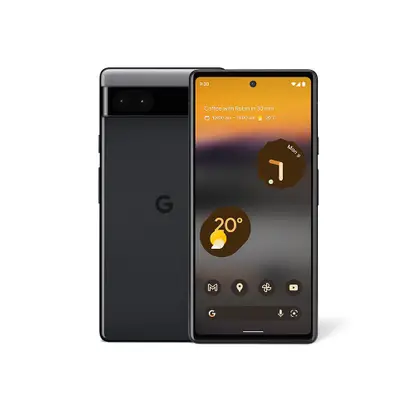
Google Pixel 6a 5G Mobile Phone Features, Price in India
Capture every moment with the Google Pixel 6a Charcoal! Featuring a 12MP dual rear camera and 8MP front camera, it’s ideal for vlogs and selfies under Rs 25,000.
Google Pixel 6a Price & Deal
The Google Pixel 6a is a smartphone that comes in a sleek Charcoal color and offers 128 GB of storage, which is a lot of space for your photos, apps, and music. It also has 6 GB of RAM, which helps the phone run smoothly and quickly, making it easy to switch between different apps. Currently, you can buy this phone for ₹24,999, which is a great deal considering its original price of ₹43,999. This means you are getting a fantastic discount of 43% if you purchase it from Flipkart. The Pixel 6a is known for its excellent camera and user-friendly features, making it a popular choice for many people looking for a reliable smartphone.
The Design Of Google Pixel 6a
Google Pixel 6a 5G Mobile Specs
- 6 GB RAM
- 128 GB storage, Non Expandable
- 15.6 cm (6.14 inch) Full HD+ Display
- 12.2MP + 12MP Dual Rear Camera, Dual LED Flash, 4k @30fps Video Recording
- 8MP Front Camera
- 4410 mAh Battery
- Google Tensor Processor
Analyzing the Google Pixel 6a: The Fusion of Flagship Performance and Mid-Range Phone
The Google Pixel 6a represents a pivotal offering in the highly competitive mid-range 5G smartphone market. Positioned as the accessible entry point into the flagship Pixel ecosystem, this device strategically leverages high-end components—most notably the proprietary Google Tensor processor—while making calculated compromises in areas like display refresh rate and charging speed to achieve a compelling price point. This analysis delves into the core technical specifications and assesses the professional value proposition of the Pixel 6a.
Performance Architecture and the Tensor Advantage
The defining characteristic of the Pixel 6a is the integration of the Google Tensor Octa-core chipset. This is a critical strategic move by Google, deliberately foregoing traditional Qualcomm Snapdragon or MediaTek mid-range silicon in favor of the same processor found in its flagship 6-series devices. The Tensor architecture is built for sophisticated machine learning and artificial intelligence tasks, providing a distinct operational advantage over competitors relying purely on general processing speed.
The processor features a complex, heterogeneous core configuration designed for efficiency and burst performance: a dual-core cluster operating at 2.8 GHz, another dual-core set clocked at 2.25 GHz, and a quad-core efficiency cluster running at 1.8 GHz. This architecture ensures that specialized tasks, particularly image processing and on-device AI functions (like real-time translation and voice assistance), are handled with exceptional speed, contributing significantly to the acclaimed Pixel user experience.
Paired with the Tensor chip is a standardized configuration of 6 GB of RAM, which provides adequate memory for multitasking and running contemporary Android applications efficiently. Storage is fixed at 128 GB of internal storage. A crucial consideration for power users and content creators is that the Pixel 6a, maintaining the lineage of its predecessors, does not offer expandable storage via a microSD card slot. While 128 GB is sufficient for many users, those generating large volumes of 4K video or storing extensive media libraries must rely on cloud solutions or periodic data transfers. The synergy between the optimized software (stock Android) and the Tensor chip minimizes performance bottlenecks, making the 6 GB RAM configuration feel smoother than similar specifications might on less optimized hardware.
Display Technology and Durability Profile
The visual interface of the Pixel 6a is managed by a 6.1-inch OLED display panel, supporting a crisp 1080×2400 (FHD+) resolution. OLED technology guarantees deep blacks, excellent contrast ratios, and vibrant color reproduction, making it highly suitable for media consumption. The design is modern, employing a bezel-less aesthetic with a punch-hole cutout for the front-facing camera.
However, the display specifications reveal the most significant area of cost optimization: the refresh rate is limited to 60 Hz. At a time when many competing devices in the premium mid-range segment have shifted to 90 Hz or 120 Hz refresh rates, the 60 Hz limit results in visibly less smooth scrolling and animations. While this does not impact static image quality or video playback (which typically runs at 24-60 fps), it is a noticeable downgrade for users accustomed to high refresh rate screens.
In terms of physical durability, the display is protected by Corning Gorilla Glass 3. While offering robust protection against scratches and minor abrasions, Gorilla Glass 3 is an older generation of protective glass, suggesting a trade-off in impact resistance compared to the newer revisions utilized on flagship devices. This necessitates prudent use of protective cases for users concerned about accidental drops.
Computational Photography: Hardware Meets AI
Pixel phones are traditionally defined by their camera performance, driven less by bleeding-edge sensor hardware and more by Google’s prowess in computational photography. The Pixel 6a follows this convention, offering a robust, dual-lens rear camera system:
- Main Camera: 12.2MP sensor.
- Ultrawide Camera: 12MP sensor.
The hardware specifications, particularly the 12.2MP primary sensor, are mature and proven designs carried over from earlier Pixel generations. However, the image output quality is dramatically elevated by the Tensor processor’s dedicated image signal processor (ISP) and the machine learning acceleration. Features like advanced HDR+, Night Sight, and Real Tone algorithms—which ensure accurate representation of diverse skin tones—are executed rapidly because of the Tensor chip.
The camera system supports professional-grade video capabilities, including 4K video recording at 30 frames per second (fps), complemented by a Dual LED Flash for low-light scenarios.
The front-facing camera features an 8MP sensor capable of capturing detailed portrait shots and supporting video calls, with recording limited to Full HD @ 30 fps. While the resolution is standard, the integrated software optimization ensures good performance in challenging lighting conditions, making the camera package highly effective despite modest sensor sizes.
Battery Management and Charging Efficiency
Sustained operational capability is provided by a 4410 mAh battery. This capacity is generally sufficient for a full day of moderate use, particularly when paired with the power management capabilities of the Tensor chip and the less power-intensive 60 Hz display.
Charging efficiency, however, is another area where the Pixel 6a trails key competitors. The device supports 18W Fast Charging delivered through the USB Type-C port. While 18W is technically ‘fast,’ it falls significantly short of the 30W, 60W, or even 120W charging speeds commonly found in rival mid-range products. A complete recharge cycle takes considerably longer, a definite practical inconvenience for users requiring rapid top-ups throughout the day. This decision underscores Google’s focus on component cost management, prioritizing sustained performance over rapid recharge times.
Conclusion: Value Proposition and Target Audience
The Google Pixel 6a is a professionally built device designed to democratize Google’s flagship user experience. It successfully balances premium features with necessary concessions to meet an aggressive price point.
Strengths:
- Flagship Performance: The Tensor processor ensures rapid operation, superior AI/ML functions, and best-in-class computational photography.
- Exceptional Camera Software: Despite older sensor hardware, the resulting image quality is among the best in its class, thanks to deep software integration.
- Pure Android Experience: As a Google device, the 6a offers a clean, unblemished Android interface and guaranteed access to immediate software and security updates.
Trade-offs:
- 60 Hz Refresh Rate: The static refresh rate is a notable deficiency in the current competitive landscape.
- Slow Charging Speed: The 18W charging capability is below industry standards for this segment.
- Non-Expandable Storage: The fixed 128 GB capacity may limit heavy video producers or multi-media consumers.
In conclusion, the Pixel 6a is not optimized for raw display refresh speed or charging convenience. Instead, it is highly optimized for intelligent, smooth operation and photographic excellence. It serves as an ideal device for consumers and professionals who highly value computational photography, system-level AI integration, timely software support, and a compact 5G form factor, and are willing to accept the trade-offs in display fluidity and charging speed.